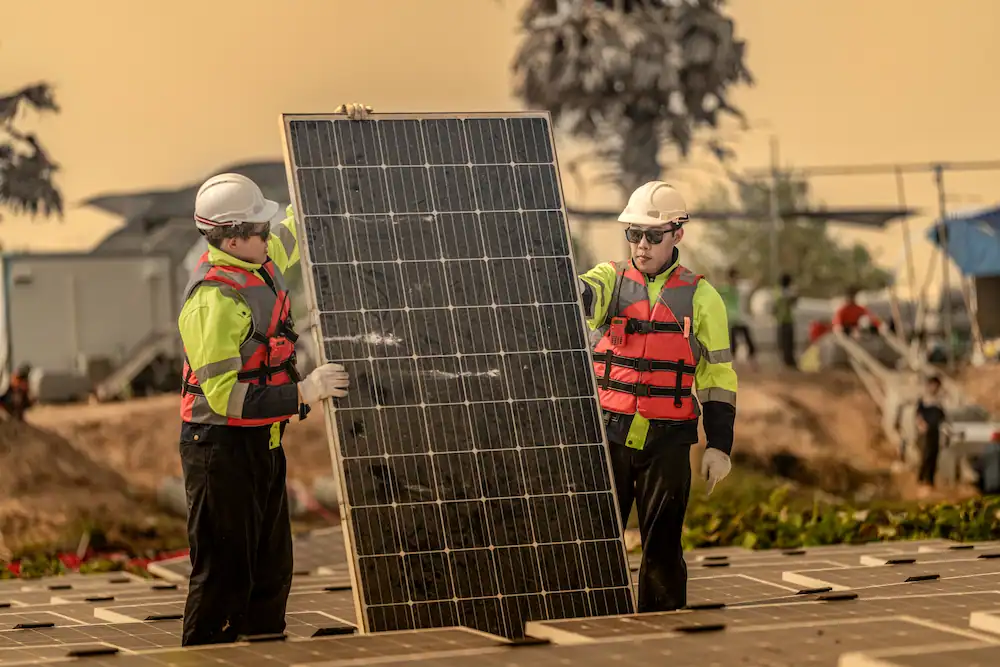
When does it pay to revamp PV modules?
Photovoltaic modules installed in past years can progressively lose efficiency. This phenomenon directly affects the energy production and profitability of the system. For this reason, PV revamping becomes an effective solution when performance is no longer in line with expectations.
By intervening at the correct time, it is possible to recover energy produced, reduce outages and maintain continuity of GSE incentives.
What is photovoltaic revamping
The photovoltaic revamping is a set of technical interventions that improve the performance of an existing system without changing its structure or authorized power. The goal is to restore optimal operating conditions by intervening on critical components.
In most cases it involves PV modules, but it can also involve inverters, switchboards, and monitoring systems.
When to intervene on photovoltaic modules
PV modules are subject to natural degradation over time. However, some conditions accelerate the loss of efficiency and make revamping necessary.
- Significant reduction in energy production
- Visual defects, microfractures or delaminations
- PID or hotspot phenomena
- Technological obsolescence of components
When these critical issues emerge, revamping the PV system allows it to regain performance without replacing the entire system.
What does revamping a plant include
Effective PV revamping intervention does not start with immediate replacement of components, but with a technical diagnosis of the system. This phase is crucial because it allows understanding where performance losses are being generated and what elements are compromising energy production.
Performance analysis is based on real data, such as historical production, comparison with expected values, and instrumental measurements. In this way, it is possible to distinguish between normal degradation of PV modules and more specific problems related to failures or suboptimal configurations.
Only after this stage can a targeted intervention be defined, avoiding unnecessary replacements and focusing investment on the components that really affect performance.
- Replacement of degraded PV modules → required when power loss is significant or structural defects are present
- Upgrading inverters → useful in case of obsolete equipment or equipment with low conversion efficiencies
- Verification of electrical connections → allows leakage, overheating, or anomalies in wiring to be detected
- Optimization of plant configuration → improves string distribution and reduces overall losses
These interventions are not performed in a standard way, but adapted to the specific conditions of the plant. As a result, revamping becomes a tailored technical operation geared toward performance recovery and stability over time.
All these activities fall under the services of operation & maintenance, which aim to ensure business continuity, reduce breakdowns and maintain high plant reliability in the long run.
Photovoltaic revamping and GSE incentives
Revamping on incentivized plants is also possible on Conto Energia plants, but requires strict adherence to the rules set by the GSE. This means that any intervention must be designed and documented in a manner consistent with the original conditions for accessing incentives.
Specifically, the GSE allows the replacement of components, including PV modules, as long as the technical and functional continuity of the system is guaranteed. The intervention must not alter the characteristics that determined the recognition of the incentive tariff.
Among the most relevant aspects to be checked are:
- Electrical and performance compatibility of new components
- Consistency of installed power with respect to incentivized power
- Tracking and certification of replaced modules
- Correct reporting of interventions to the GSE
If these conditions are not met, the risk is suspension or revocation of incentives, with a significant economic impact on the plant.
For this reason, revamping requires careful technical and documentary management. The activities of technical consulting allow the intervention to be planned in a compliant manner, avoiding errors that could jeopardize profitability in the long run.
The GSE also distinguishes between ordinary maintenance, extraordinary maintenance and major interventions. The classification affects the mode of communication and verification of plant compliance.
What incentives are available
PV revamping has no direct incentives. However, the economic benefit comes from maintaining existing GSE incentives and increasing energy production.
| Intervention | Benefit |
|---|---|
| Replacing modules | Increased energy production |
| Inverter upgrade | Improved efficiency |
| Plant optimization | Loss reduction |
| GSE management | Continuity of incentives |
Does revamping pay off?
PV module revamping pays off when degradation reduces the profitability of the system and increases maintenance costs, or when installed components are no longer supported or are not up to current standards.
In these cases, intervening allows production to be recovered and plant life extended without new permitting processes.
Difference between revamping and repowering
PV revamping and repowering are two distinct interventions that address different needs. Revamping intervenes on existing components to recover efficiency, while repowering modifies the system to increase the installed power.
In the first case, work is done on elements such as PV modules and inverters to reduce losses and improve performance. In the second case, on the other hand, new production capacity is introduced, with more significant impacts from a permitting and design perspective.
| Revamping | Repowering |
|---|---|
| Improvement of existing components | Increasing installed power |
| Unchanged plant structure | Structural and plant modifications |
| Possible retention of incentives | New authorization evaluations |
When the plant is producing less than expected due to degradation, revamping is often the most effective solution. If, on the other hand, the goal is to increase overall production, more structured PV repowering interventions should be considered.
How to evaluate a revamping intervention
The evaluation of a PV revamp cannot be based on assumptions, but on real data related to the behavior of the system over time. Energy production, performance, and the condition of components are the elements that make it possible to understand whether and where to intervene.
Through instrumental surveys, analysis of production curves, and field verifications, it is possible to identify the causes of inefficiencies, distinguishing between module degradation, electrical anomalies, or limitations related to plant configuration.
This phase allows a targeted intervention to be defined, avoiding unnecessary replacements and focusing investment on the components that really affect performance. In many cases, a thorough technical assessment allows production to be recovered even without invasive interventions.
Reliable results require the integration of design expertise and technical analysis of the plant, where each intervention is checked against expected performance and regulatory constraints.