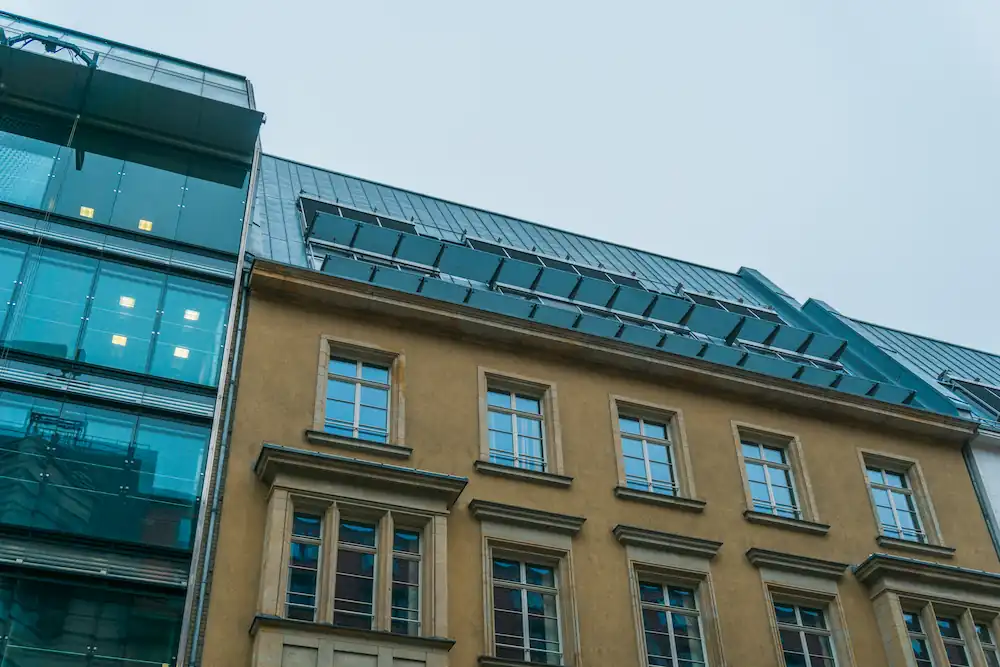
Energy upgrading intervention on existing buildings
Existing buildings represent a significant part of the housing stock and, in most cases, are characterized by high energy consumption and inefficient resource management. It often happens especially with historic buildings, when systems and envelope are no longer aligned with current needs.
An energy upgrading intervention fits in as a structured technical process that links analysis, design, and targeted interventions with the goal of improving building performance, reducing consumption, and making energy management more stable over time.
The building’s characteristics, energy behavior, existing facilities, and space utilization patterns are then reevaluated.
When an existing building requires upgrading
Not all buildings have the same critical issues, but there are recurring conditions that indicate the need for action. These signs provide insight into when energy performance is no longer adequate relative to actual needs.
1. Technical signals not to be ignored
- Progressive increase in energy consumption without significant changes in activities
- Outdated or low performing technology systems compared to current standards
- Thermal losses due to uninsulated or degraded envelope
- Difficulty in maintaining stable indoor conditions in terms of temperature and comfort
- Variable and poorly controllable energy costs
These elements indicate an unbalanced relationship between building and energy use. Consequently, intervention becomes necessary to re-establish a level of efficiency consistent with operating conditions.
2. Evolution of energy needs
Another aspect to consider relates to changingbuilding needs over time. The introduction of new facilities, increased electrical loads, or changes in use can significantly alter the energy profile.
When requirements evolve but the technical structure remains unchanged, an imbalance is created: the energy required increases, but the system is not designed to support it efficiently. For this reason, upgrading becomes a necessary step to realign performance and actual use.
What an energy upgrading project includes
An intervention on existing buildings involves multiple technical areas that must be integrated to lead to improved performance.
| Scope of intervention | Main activities | Technical objective |
|---|---|---|
| Building envelope | Thermal insulation, interventions on roofs and dispersing surfaces | Reducing dispersion and improving passive energy efficiency |
| Technology systems | Upgrade air conditioning, power generation and distribution systems | Increase system efficiency and reduce consumption |
| Energy production systems | Integration of photovoltaic systems and self-consumption systems | Producing energy on-site and reducing grid withdrawal |
When these interventions are designed in a coordinated way, the building moves from an inefficient condition to a more balanced configuration where energy production, consumption, and dispersion are under control.
The technical process from diagnosis to intervention
To achieve consistent results, a redevelopment intervention must follow a structured path. Each phase is linked to the next and helps define the overall effectiveness of the project.
1. Energy analysis of the building
The first phase consists of energy data collection and analysis. Consumption, envelope performance, and system behavior are evaluated. This step allows critical issues to be identified and intervention priorities to be defined.
2. Design of interventions
Based on the data collected, the most suitable technical solutions are defined. The design must ensure consistency between existing structure, facilities, and improvement goals, avoiding interventions that are not aligned with the real needs of the building.
3. Execution and control of the work
During the operational phase, the coordination of activities and technical control are essential to ensure that the designed solutions are implemented correctly.
4. Monitoring and management over time
Once the intervention is completed, performance must be monitored to ensure that results are in line with expectations. Ongoing management allows deviations to be identified and efficiency levels to be kept high.
How energy performance changes after intervention
When an existing building is upgraded with consistent technical criteria, the first effect is on the ratio of energy required to energy actually used. Leakage is reduced, systems work under more efficient conditions, and the entire building-plant system achieves a better balance.
A well-designed intervention thus makes it possible to reduce requirements, optimize energy use, and make the building’s behavior more efficient over time. In many cases this is also reflected in an improvement in energy class, but the most important figure remains the building’s ability to respond better to actual conditions of use.
Cost reduction and energy control over time
Improved performance has a direct consequence on economic management. When a building consumes less energy to maintain the same level of utilization, the operating cost tends to decrease and becomes more controllable. This shift affects both production buildings and buildings used for activities that require continuity of operation.
Self-consumption and energy production
In cases where redevelopment also includes energy production systems, such as photovoltaics, the building can cover part of its needs directly on site. The relationship is linear: the more energy produced and used at the same time, the less reliance on the grid.
This integration is particularly useful when consumption is concentrated during daylight hours or when the building has constant electrical loads. For this reason, upgrading can also include solutions related to the increased yield of existing photovoltaic systems, especially when the available surface area needs to be used more efficiently.
Stability of operating costs
Not only cost reduction, but also more predictability. A building that dissipates less energy and uses more efficient systems is less susceptible to management imbalances, unplanned shutdowns, and hard-to-control cost increases.
Intervene on existing buildings with consistent technical criteria
Effective upgrading is one that reduces consumption, improves performance, and makes the building more stable over time. This is achieved only when analysis, design and execution work in the same direction.
For this reason, the value of the intervention lies not in the quantity of the works carried out, but in their ability to solve critical issues and concretely improve the energy behavior of the building.
If you are considering an intervention on an existing property, a focused technical comparison will allow you to identify priorities and build a truly effective solution.