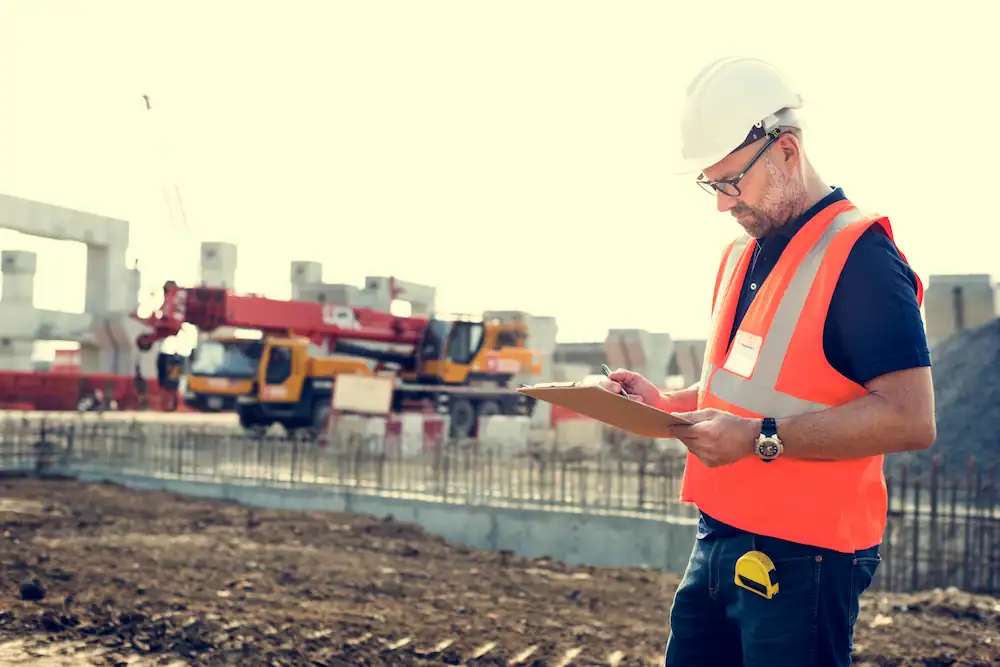
On-site operational consultations to reduce errors, delays, and critical issues during construction
On-site operational consulting comes into play when the execution phase requires control, coordination and the ability to intervene on critical issues while work is in progress. On the construction site, in fact, it is not enough to have a defined project or consistent initial planning: it is the operational tightness of activities, the connection between companies and the ability to keep time, work and safety conditions aligned that counts.
This support is useful when day-to-day management directly affects the quality of execution. If activities overlap, in fact, stakeholders increase or site conditions make the organization more delicate, and technical field supervision becomes a central element.
The construction site as a complex system between critical operational issues and technical management
A construction site is an environment in which work, priorities, technical constraints, safety, and lead times coexist. This combination makes operational management more delicate than it appears on paper. Even when the design framework is clear, misalignments between planned and actual activities often emerge in the execution phase, with immediate effects on work progress.
The most frequent problem concerns coordination between companies and work: when several parties operate on the same site, the risk of overlapping, slowdowns or misaligned steps increases. In this case, the solution is not to add more documentation, but to introduce a supervision that keeps scheduling, field presence and verification of activities together.
Another recurring point arises from the distance between design and execution: a correct technical solution may encounter application difficulties during installation, erection or retrofitting, especially when the actual context presents constraints that have not emerged before. This is where technical support is needed during the works, so as to intercept critical issues immediately and limit deviations that may affect quality, time and cost.
Many construction sites also show little safety management integrated with daily operations. Documentation exists, but it is not always translated into controls, checks and behavior consistent with the work being done. As a result, safety remains separate from technical management instead of accompanying it.
Instead, effective operational advice helps to link activities, prescriptions and control in the field.
Then there is the issue of work monitoring: when there is a lack of constant verification, execution errors, anomalies or delays are detected late, often when correcting them weighs more on the site organization. This is why operational monitoring is also valuable economically: identifying a critical issue earlier allows for more orderly intervention.
Finally, there is often the need to manage unforeseen contingencies and variations without compromising overall progress. A construction site does not proceed in a linear fashion and requires quick decisions based on a technical reading of the activities in progress.
In these cases, operational consulting coordinates companies, verifies work, and maintains continuity between site phases. Summing up, we could therefore say that operational consulting at the construction site helps in the case of:
- Insufficient coordination between enterprises and work stages;
- Deviations between design and field implementation;
- Safety not integrated with daily site management;
- Lack of continuous control over processing;
- Complex management of unforeseen contingencies, changes and operational variations.
Operational activities and consulting services during the work
What activities really help keep the construction site governable? Operational consulting does just that: reading the context, checking what is happening during execution, and supporting the choices that allow the work to continue in greater order.
The most relevant activities include monitoring progress, verifying consistency between work and technical directions, supporting coordination between the figures involved, and guarding against critical issues that emerge during construction.
Each intervention gains value because it produces a practical effect: more control over activities, fewer repeated errors, greater operational continuity.
This approach is particularly useful at worksites where the organizational load is growing rapidly.
When executive steps are numerous, consulting helps to make the operational framework more readable and facilitate decisions when they are needed. This is why it is also often linked to broader activities of specialized technical support, especially when site management requires a cross-reading of executive, documentary and organizational aspects.
- Verification of work during execution
- Support coordination between enterprises, technicians, and operational activities
- Control of critical issues affecting time and quality
- Monitoring progress against priorities and work steps
- Technical support in decisions affecting the construction site
What is the role of the site engineering consultant in the execution phases?
The technical site consultant is a figure who supports the executive phase with an operational oversight oriented to the continuity of the work.
Simply put, its value emerges most when the worksite requires a presence capable of reading ongoing activities, identifying critical issues and facilitating alignment between what has been planned and what is actually happening in the field.
It is not a figure that replaces other technical roles, but a support that helps keep execution consistent. This is why his intervention is useful when technical observation, verification of workmanship, liaison between different subjects and constant attention to points that can generate slowdowns or nonconformities are needed.
In concrete terms, the technical site consultant helps to clarify operational knots, smooth the transitions between phases, and reduce the risk of small critical issues turning into larger problems. In addition, his presence is even more relevant when the construction site is part of activities with a strong technical component, where the relationship between design, execution and control must remain stable throughout the duration of the work.
When operational consulting becomes necessary
Operational consulting becomes particularly useful when the worksite exceeds a threshold of complexity that makes document-only or occasional management insufficient.
This is the case, for example, in cases where there are a large number of companies involved, the work is intertwined on a tight schedule, or the technical environment requires frequent checks during execution.
It is also a frequent condition in interventions on existing plants or facilities, where the operational reality may differ from what was initially planned and require rapid adjustments. In these cases, field support helps to maintain control of activities and manage decisions affecting the progress of work with greater order.
The need also increases when the construction site requires constant oversight of the relationships between execution, safety and technical coordination. For this reason, operations consulting also connects to broader technical management and safety oversight services in the execution phase, especially in contexts where each phase must remain aligned with what is actually happening in the field.
- Construction sites with multiple enterprises and activities to be coordinated in parallel
- Complex technical work requiring in-process verifications
- Work on existing structures or facilities with high operational variables
- Situations with recurrent critical issues on timing, execution, or organization
- Contexts in which security and operations must remain tightly integrated
Construction site safety coordination and the difference between PSC and SOP
In construction site work, safety management requires a continuous link between documentation and operational activities. Two central tools are the PSC (Safety and Coordination Plan) and the SOP (Operational Safety Plan), which act on different but complementary levels.
The PSC is the document that defines the general safety organization at the construction site. It is drafted at the design stage and establishes how to manage the risks arising from the simultaneous presence of several companies and works.
The SOP, on the other hand, is specific to each contractor and describes in detail how that individual company manages the risks associated with its operational activities.
| Document | Meaning | Function | Scope of operation |
|---|---|---|---|
| PSC | Safety and Coordination Plan | Defines general safety rules and coordination between companies | Entire construction site and interactions between multiple parties |
| SOP | Operational Safety Plan | Describes the operational methods by which an individual enterprise manages its risks | Activities specific to the individual enterprise |
The critical point emerges when these documents remain disconnected from day-to-day management; in many construction sites there is a gap between what is planned and what actually happens during the work. As a result, planned procedures lose their effectiveness at the most operational stages.
On-site consulting can reduce this gap by linking safety prescriptions, workmanship and direct field monitoring.
This translates into continuous checks on activities, adaptation of measures to actual conditions, and timely intervention when unanticipated critical issues emerge.
Impact on time cost and continuity of work
Operations management directly affects site efficiency. Without constant supervision, even small misalignments generate delays, rework, and interruptions.
Counseling intervenes in three key aspects.
- Timing: improves coordination between phases and reduces interruptions
- Costs: intercepts errors before they require complex corrective action
- Continuity: keeps processing running smoothly by avoiding operational blockages
The result is more stable management with greater control over quality and execution.
Integration with technical management and construction management
The on-site consultant complements the technical figures already present, without overlapping.
Liaison with construction management allows consistency between design and execution to be maintained; construction management oversees technical and contractual aspects, while operations consulting follows day-to-day activities. This allows technical decisions to be translated into concrete actions in the field.
When necessary, support also extends to engineering and design activities, especially in cases where in-process verifications or adjustments are needed.
Why operations consulting improves site management
A construction site remains efficient when activities are aligned and controlled over time. Operations consulting enables this: it introduces a continuous link between planning and execution, enabling immediate action on critical issues.
This approach makes the construction site more manageable: decisions are made more quickly, errors are detected earlier, and work proceeds more smoothly.
If you want to improve the operational management of your construction site, you can request a face-to-face discussion to evaluate the most suitable support.